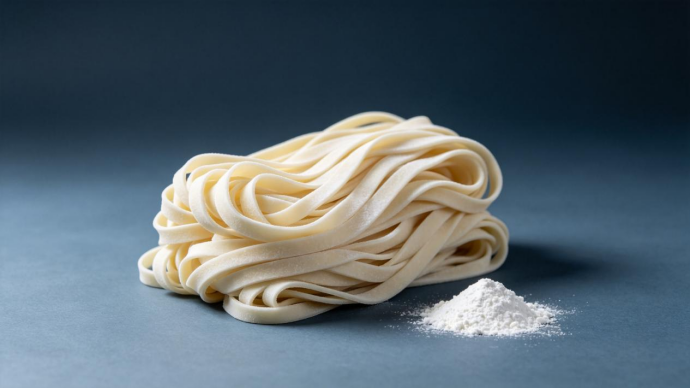
Challenge: Fresh wet noodles have high moisture content, making them prone to mold growth and limiting their shelf life at room temperature. Cold chain logistics can alleviate this but increases distribution costs and squeezes profit margins.
Key indicators for fresh noodles vary depending on the specific recipe and production process (such as whether an alkaline agent is added); the following are general reference ranges:
Moisture content: Typically between 20% and 45%.
Fresh wet noodles (semi-dried noodles): Lower moisture content, approximately 20%–25%.
Fresh noodles: Higher moisture content, approximately 30%.
Raw cut noodles: Moisture content requirement is ≤40%, with a common range of 29%–35%.
Water activity (Aw): An indicator that reflects the moisture available for microbial growth more accurately than total moisture content. Fresh noodles typically exhibit high values, ranging from 0.890 to 0.980. This creates highly favorable conditions for microbial growth and is a primary reason for their perishability.
pH value: This value depends largely on whether alkaline agents (such as sodium carbonate or potassium carbonate) have been added.
Standard noodles: Noodles without added alkaline agents typically have a pH between 6 and 7 (near neutral).
Alkaline noodles: Noodles with added alkaline solution show a significantly higher pH, generally between 8.0 and 9.0, though it can reach as high as 9–12.
It is worth noting that studies indicate the rate of spoilage is fastest when the pH is between 8.0 and 8.5. Additionally, national standards specify requirements for the acidity of wet noodles (e.g., ≤8.0°T), which serves as another important indicator of freshness.
Natural Preservation Solution:
Buffered vinegar powder has shown notable anti‑mold performance in noodle systems, making it a promising natural preservation option. This powder retains active components such as acetic acid, lactic acid, peptides, and amino acids. It inhibits mold growth and spore germination by lowering the environmental pH and disrupting mold cell membrane permeability.
Application Case – Wet Noodles
– Objective: Evaluate the preservative effect of buffered vinegar powder in fresh wet noodles.
– Condition: 8‑day observation at 37°C.
– Groups: Blank (no preservative), Test 1 (0.1% buffered vinegar powder A64), Test 2 (0.25% A64).
Summary of Results:
The blank sample began to show mold growth on day 2. Adding 0.1% buffered vinegar powder A64 delayed mold onset to day 5, extending the mold‑free shelf life to 4 days; adding 0.25% delayed onset to day 8, extending shelf life to 6 days. These results demonstrate that buffered vinegar powder effectively inhibits mold. Its broad‑spectrum activity against bacteria and mold aligns well with the preservation needs of wet noodle products and meets the growing demand for clean‑label ingredients.
Key Advantages
– Process‑friendly: Can be directly mixed into flour during dough preparation; its effect remains stable through sheeting and cooking steps, typically requiring no modification to existing production lines.
– Targeted anti‑mold action: Directly addresses the primary spoilage issue of wet noodles (mold contamination, e.g., Aspergillus).
– Natural origin: Supports clean‑label trends.
– Flexible dosage: Allows adjustment to balance cost and efficacy.
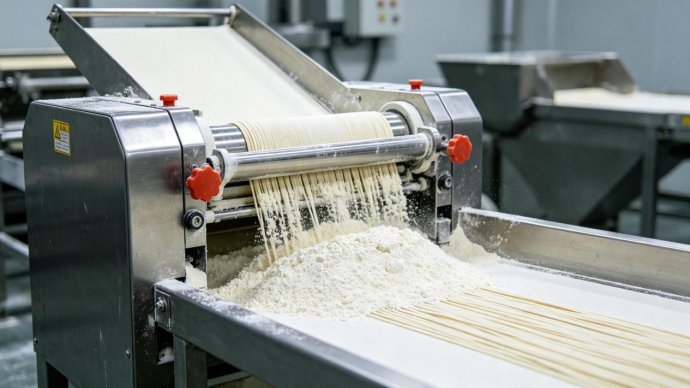
For fresh wet noodles and raw noodle products, buffered vinegar powder offers a practical, natural preservation solution that extends shelf life with minimal process changes.
Free
sample
