Pre-Notes on Key Terms:
1. Acetic acid‑acetate conjugate fermentation system (core term)
A buffered balance system made of acetic acid (the molecular antibacterial ingredient) and acetate buffering components. It slowly releases undissociated acetic acid molecules and keeps the product pH stable. Unlike regular vinegar that discharges strong acid all at once, it eliminates harsh sour odor and sharp pH swings.
2.Undissociated acetic acid molecules (active antibacterial ingredient)
Fat-soluble acetic acid molecules that stay un-ionized. They can penetrate microbial cell membranes and are the core form of organic acids for antibacterial effects. Once ionized into acetate ions, the antibacterial power almost disappears.
3.Clean Label
Compliant with the General Requirements for Clean Label Foods (T/CAPS 064‑2025). It adopts natural fermented raw materials instead of chemically synthesized preservatives, with short, easy-to-read ingredient lists and no artificial synthetic additives.
The global food industry is rapidly shifting to clean label standards. Traditional chemical preservatives like sodium benzoate, potassium sorbate and sodium diacetate are no longer suitable for brands pursuing natural positioning.
Conventional vinegar powder on the market relies on high-concentration acetic acid for crude antibacterial performance, with four obvious drawbacks: overly fast acid release, sharp pungent sour taste, unstable finished product pH, and ruined original food flavor. These flaws limit its use in delicate production such as bakery, sauces and meat products.
Supported by the acetic acid‑acetate conjugate fermentation system, fermented vinegar powder delivers long-lasting antibacterial effects, mild flavor, stable pH and full label compliance. It has become a mainstream natural anti-corrosion ingredient for industrial upgrades.
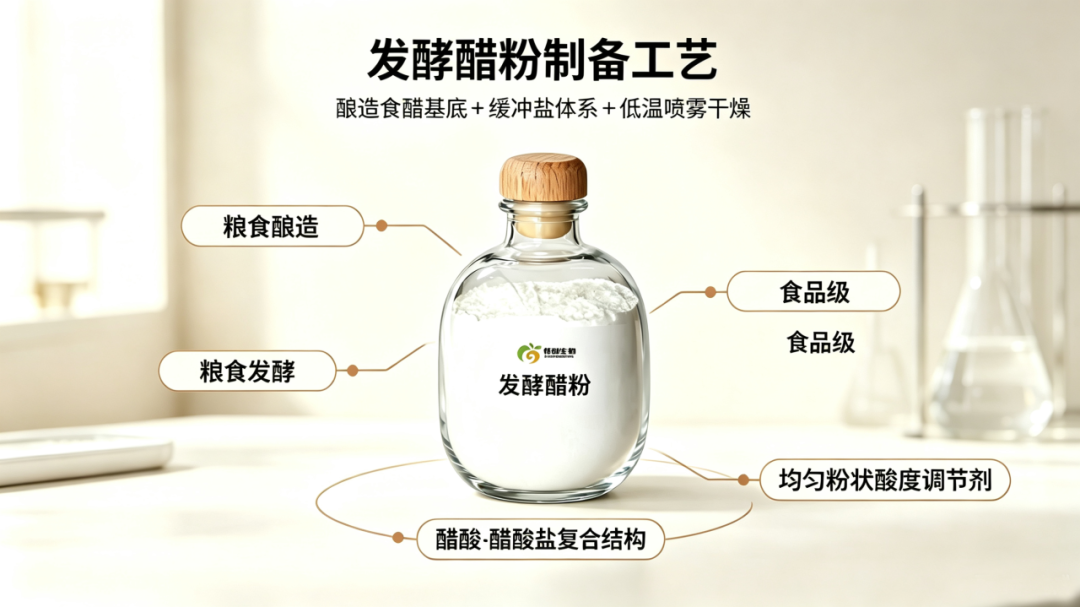
Buffered vinegar powder uses liquid deep-fermented grain vinegar as raw material. Food-grade fermented potassium and sodium salts are added to build a buffer salt system, then processed into powder through an integrated low-temperature synchronous spray-drying technique.
Process advantage: Low-temperature drying prevents acetic acid volatilization under high heat, retaining all antibacterial active substances.
High water solubility: Can be directly blended into liquid sauces, dough and meat mixtures.
Unlike counterfeit blended vinegar powder made from chemically synthesized acetic acid, our product is fully produced from fermented grain materials. All components meet China’s national standard GB2760.
Regulatory classification: Acidity regulator (not classified as preservative), allowing concise ingredient labeling that meets the mandatory rules of T/CAPS 064‑2025 (natural raw materials, no unnecessary synthetic preservative aids).
Global certification: Approved by the European Food Safety Authority (EFSA) with EU additive code E267, eligible for export to Vietnam, EU and other regions, complying with both domestic and international food regulations.
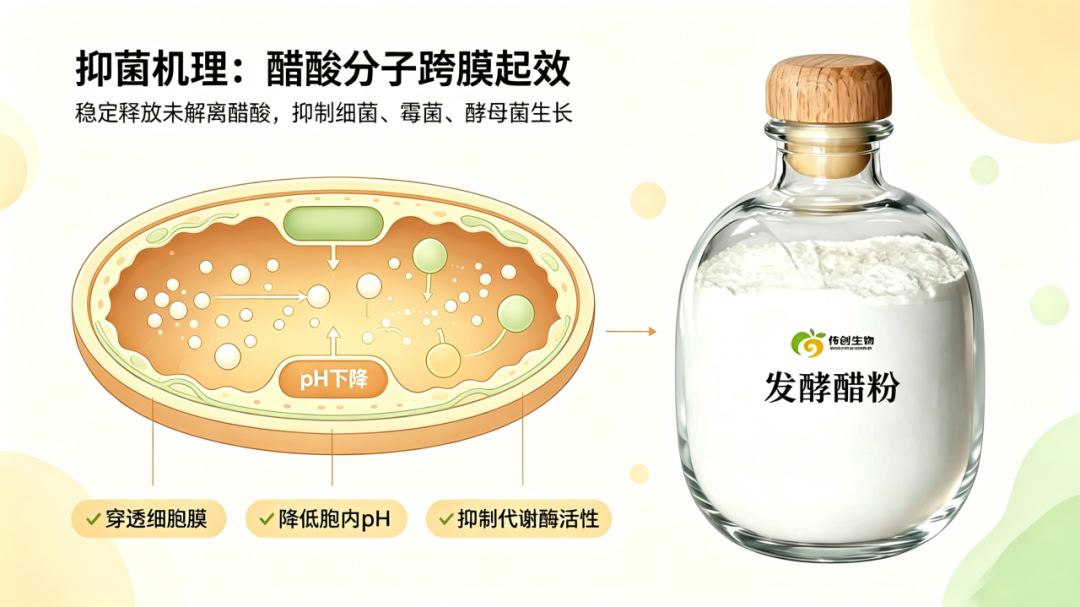
It releases massive hydrogen ions instantly to force down the overall product pH. The strong acidic environment suppresses bacteria but creates an overpowering sour taste that ruins the food’s natural aroma.
Slow release of fat-soluble undissociated acetic acid molecules
These molecules pass through the phospholipid cell membranes of bacteria, mold and yeast. After entering microbial cells, they ionize to release hydrogen ions, lowering internal cell pH and blocking glycolysis (the core energy metabolism process for microbes). Deprived of energy, spoilage microbes stop reproducing.Dual inhibition from acetate components
Acetate attaches to microbial cell walls to break membrane permeability, causing nutrient leakage inside cells. It also stops pathogenic spores from germinating.Broad-spectrum coverage
It controls typical meat pathogens (Listeria, Clostridium perfringens, E. coli, Staphylococcus aureus), plus high-osmosis resistant yeast, Penicillium and Aspergillus commonly found in sauces and syrups.The buffered system locks steady external product pH without drastic acidity changes. It continuously releases tiny amounts of antibacterial molecules even under high-temperature baking, long refrigeration or shifting salt concentrations. This solves two major issues of traditional vinegar powder: overpowering early sourness and weak late-stage antibacterial effects.
For chilled ready-to-eat meat: Buffered vinegar powder restrains Listeria growth over long-term refrigeration to extend shelf life, without damaging meat water retention or altering meat flavor.
For bakery goods: It does not slow gluten fermentation, supporting normal dough rising with no bitter-sour aftertaste in finished products.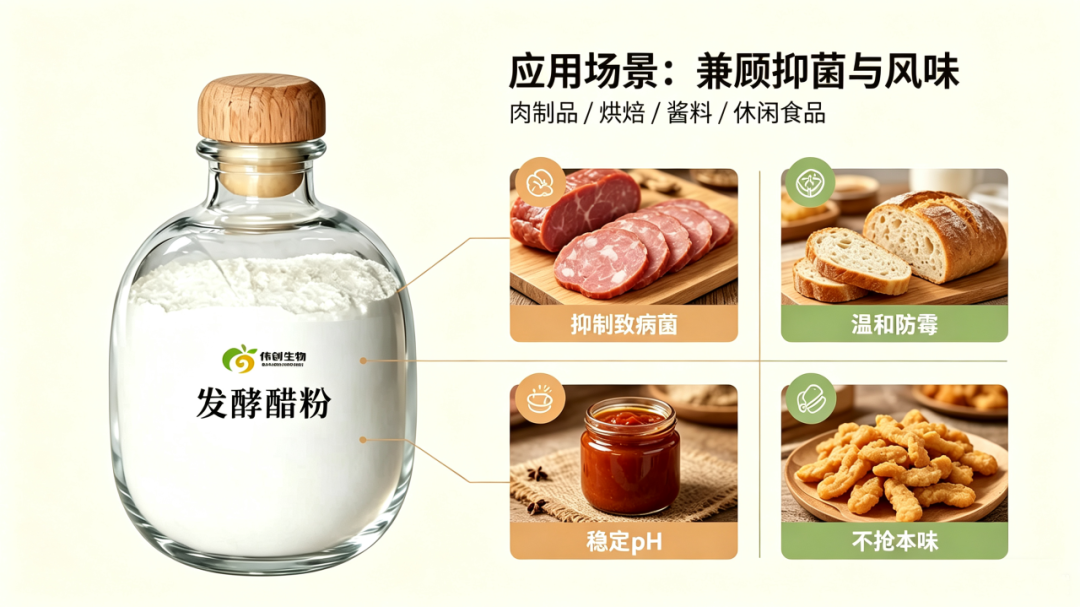
A small dosage inhibits pathogens and improves meat protein water retention, reducing water loss and shrinkage during cooking. It directly replaces sodium diacetate to shorten ingredient lists, fits low-salt formulas, and extends shelf life at room and chilled temperatures.
Slow-release organic acids stop Penicillium and Aspergillus growth without interfering with gluten fermentation. It eliminates mold issues in room-temperature stored baked goods, replacing calcium propionate and other chemical mold inhibitors for clean label long-shelf bakery lines.
For compound seasonings like salad dressing and pickles, it stabilizes system pH to avoid sauce emulsification separation and over-fermentation sourness in pickles. The soft sour taste does not overpower the main ingredient flavor, matching consumer demand for minimal ingredient lists.

Domestic standard: The General Requirements for Clean Label Foods (T/CAPS 064‑2025) has been formally implemented. Phasing out synthetic preservatives is now a universal consensus among food brands.
International certification: EFSA published a 2022 scientific assessment confirming acetic acid‑acetate complexes can be fully metabolized by the human body with zero residue, safe for all age groups and permitted for use in all food categories.
Market trend data from Fi-Europe: Fermented vinegar-based natural antibacterial ingredients are top priority purchases for food manufacturers across Southeast Asia and the EU.
As a co-developer of fermented vinegar powder and the T/CAPS 064‑2025 clean label standard, we have years of accumulated fermentation technology. We develop customized fermented vinegar powder models for low-salt meat, high-temperature bakery, acidic sauces and plant protein foods.
Compared with generic market vinegar powder, we can precisely adjust fermented salt ratios to balance antibacterial strength, flavor performance and processing tolerance. Our solutions satisfy three core demands: food safety, pleasant finished taste and brand regulatory compliance, delivering complete technical support for natural anti-corrosion reform and clean label upgrades across the food industry.
Its key advantage is not simply higher total acid content. Instead, the acetic acid‑acetate conjugate fermentation system achieves four benefits at once: long-lasting antibacterial activity, mild acidity, consistent natural flavor and clean label compliance.
Amid the global shift of food manufacturing toward natural, healthy and standardized production, fermented acidity regulators like our vinegar powder will keep replacing traditional chemical preservatives, becoming a foundational raw material driving quality upgrades for the whole food industry.
Free
sample

