
In the consultation regarding the application of fermented vinegar powder, the flavor issue is one of the most concerning matters for food enterprises. “Will it be sour? Will it alter the original flavor of the product?” – This is almost a question that every new customer will ask.
The answer is: With reasonable addition and proper process, it is almost imperceptible. Excessive addition or improper usage will lead to an acidic base. The sourness released by fermented vinegar powder is gentle and has low volatility, completely different from the sharp and pungent sourness of ordinary vinegar powder. However, for different categories and different flavors of products, the degree of influence varies.
Today, we will explain each category one by one.
Meat products: Excellent at removing odor and reducing greasiness

Meat products are the category where fermented vinegar powder is most commonly used, and it is also one of the categories with the best flavor expression.
If used correctly, it won’t make the meat taste sour at all; instead, it will enhance the flavor of the meat – it can suppress the fishy smell of the meat, the blood-water fishy smell, as well as the rancid smell and meaty odor that occur when frozen products are repeatedly thawed; it can also neutralize the greasiness of the fat, improve the freshness, and make the meat products taste more refreshing.
Products with enhanced flavors are the safest: spicy, five-spice, smoked, braised – these all use spices that can mask the faint underlying acidity. With 0.25% – 0.3% of acidity content, there is almost no sour taste exposed, and they can also eliminate the fishy smell and inhibit the rancid smell during refrigeration.
Be cautious with light and plain flavors: products like children’s minced meat, plain boiled and marinated dishes, and plain beef patties are more sensitive to sourness. It is safer to keep the amount within 0.1% – 0.2%.
Reduce the amount of sweet products: For example, sweet barbecue pork in honey sauce, cheese-coated sausages – the sweetness will enhance the perception of sourness. Therefore, you can appropriately reduce the amount.
Baking: Prevent Mold Growth Without Losing Flavor
When using fermented vinegar powder in the baking industry, the main concerns are whether it will become sour and whether it will affect yeast fermentation. In fact, at low doses, there is no need to worry at all – an addition of 0.1% to 0.45% can not only inhibit mold growth and delay oil oxidation, but also does not affect yeast fermentation, and does not destroy the wheat aroma and milk aroma. Whole wheat and mixed grain bread can even get an extra bonus. The slight acidity of the fermented vinegar powder can mask the bitter taste of bran, making whole wheat bread more mellow to taste. For sweet cakes and cream pastries, less addition is necessary, as too much will overpower the sweetness and milk aroma.
Rice and flour products: Sustained flavor and antibacterial properties
Adding the regular dosage (0.1% – 0.45%) to noodles, pasta sheets and rice flour can inhibit fermentation and prevent sourness, as well as slow down the growth of mold at room temperature. There is no obvious sour taste, and the aroma of rice and wheat is not destroyed. For meat products (baozi, dumplings), the filling should be added normally (0.1% – 0.4%). This does not damage the meat flavor, and it can also reduce greasiness and remove the frozen fishy smell, solving the pain point of repeated thawing in supermarkets. For sweet filling products (milk filling buns, bean paste buns), it is necessary to reduce the amount of both the dough and the filling.
Aquatic products: Exceptionally effective in removing fishy smell
Aquatic products are the “hidden bonus” of fermented vinegar powder. They have an extremely good deodorizing effect. They can effectively suppress fishy smell, seawater smell, and frozen protein odor. They can also slightly enhance the freshness and sweetness of seafood. However, for plain seafood, the dosage should be controlled. If added too much, it will overpower the natural freshness and sweetness of the seafood. A suitable dosage range is 0.12% – 0.15%. For heavily seasoned dishes like spicy fish balls and spicy shrimp slushes, a dosage of 0.25% – 0.3% can be used.
Flavor Control Red Line and Application Principles
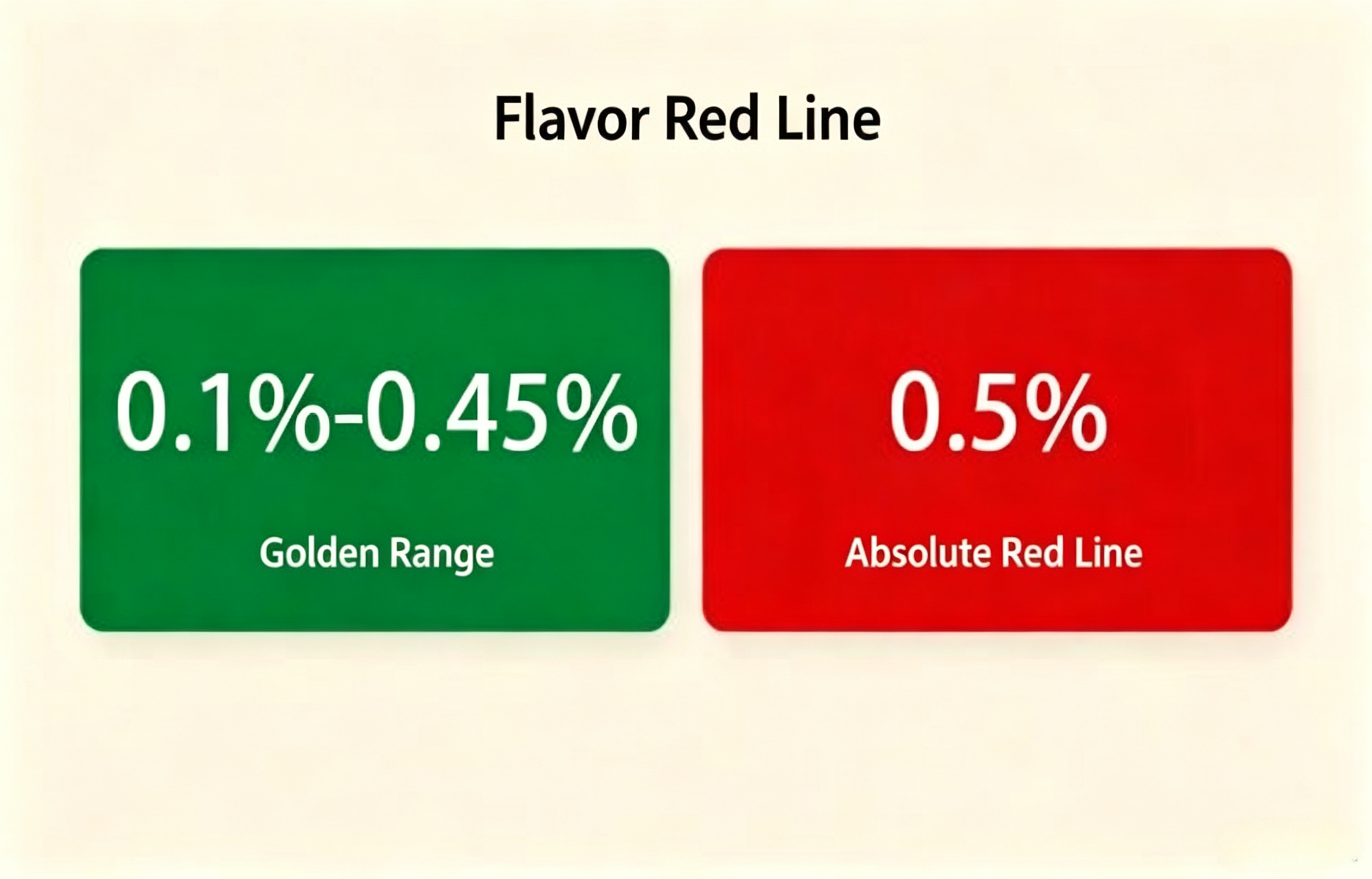
For most food systems, if the addition of fermented vinegar powder exceeds 0.5%, a significant sensory sourness will occur and the original flavor of the product will be compromised. This is an absolute red line.
1.**0.1% – 0.45%** is the golden range for industrial applications. In specific applications, the addition amount can be dynamically adjusted according to the flavor base of the product:
Revised seasoning system (spicy, five-spice, smoked): Can be used to the maximum extent. The spices can mask the faint underlying acidity.
Light and Original Flavor System: Select the lower limit value to ensure pure flavor.
Sweet and creamy type products: Have a low perception threshold for sourness. It is recommended to use half the amount.
The ultimate application of fermented vinegar powder lies in the phrase “caressing the earth without making a sound” – making the product perceived by consumers to be fresher and with a more harmonious flavor.
Free
sample
