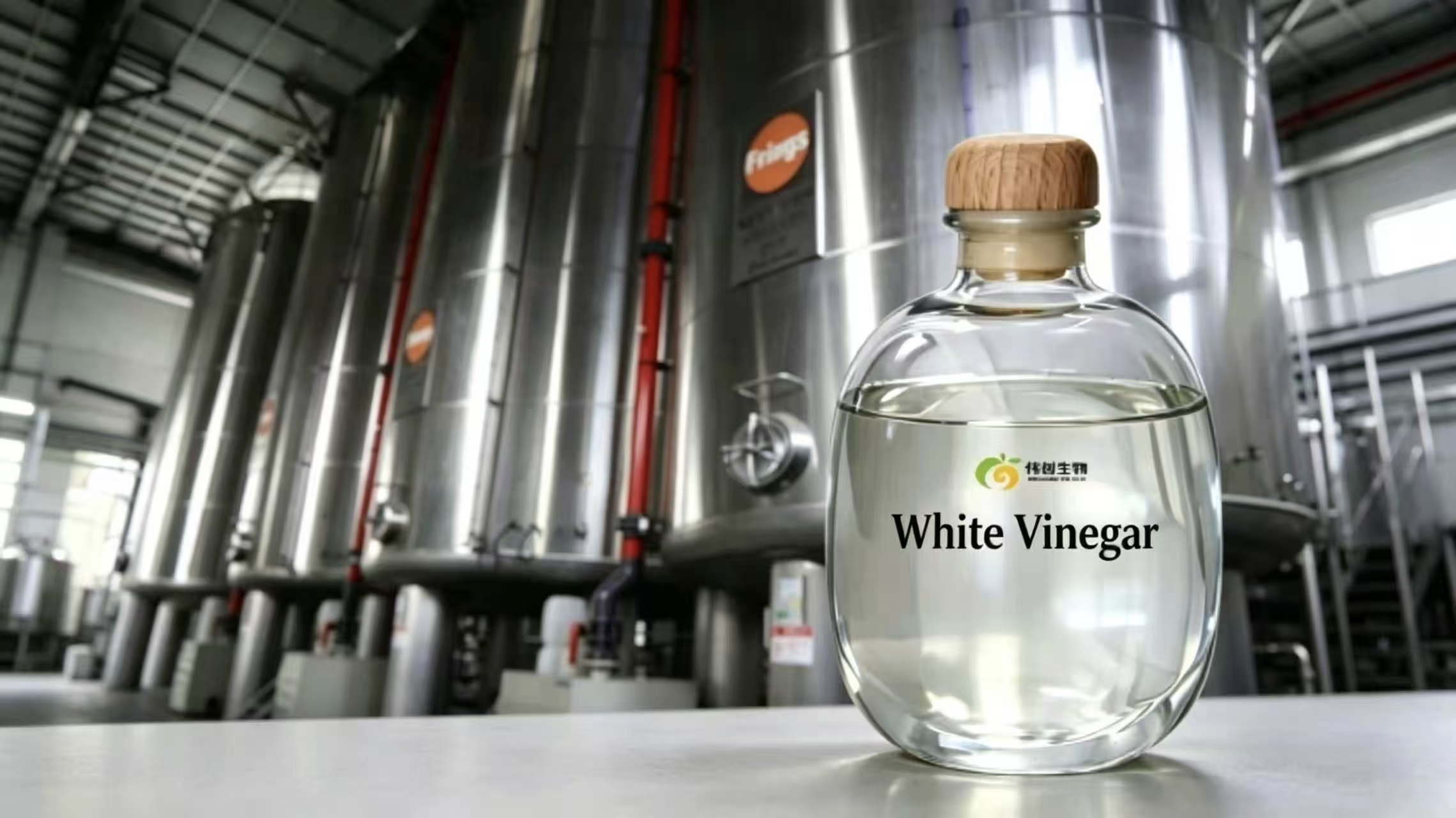
From organic corn cultivation to fermentation and filling, the production of organic white vinegar relies on a controlled supply chain and carefully managed manufacturing process.
For food manufacturers, organic vinegar is more than an acidifying ingredient. It can also become part of a clean label and organic product strategy, provided that the ingredient, processing, certification and final product claims meet the applicable organic requirements.
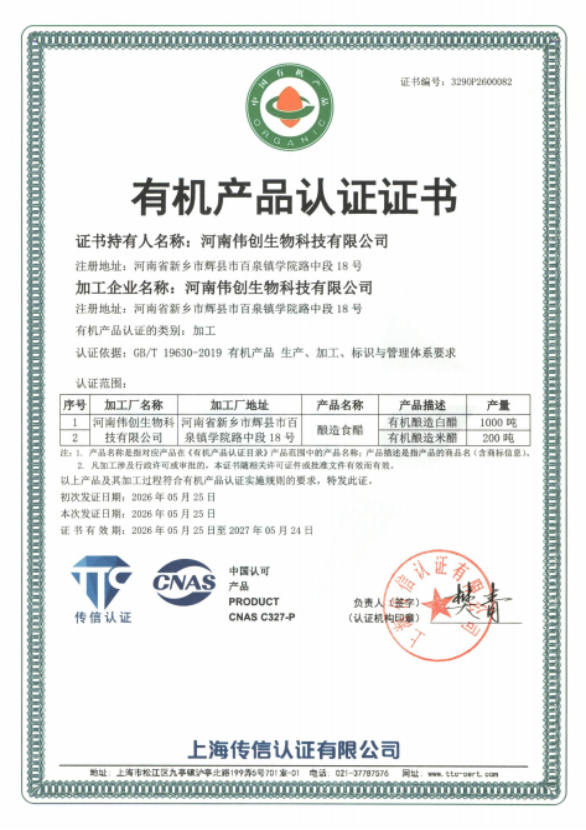
At Henan Weichuang Bio-tech Co., Ltd., our organic brewed white vinegar is produced from raw materials sourced through an organic production system and manufactured under controlled fermentation conditions. With traceable raw materials and quality management throughout production, it is designed for food manufacturers seeking a certified organic vinegar ingredient for a wide range of applications.
The value of organic white vinegar starts with its raw materials.
Our organic vinegar production uses agricultural raw materials sourced from a compliant organic production system. Organic production requirements place strict controls on agricultural inputs and prohibit the use of genetically modified materials and prohibited synthetic agricultural chemicals within the certified production system.
For food manufacturers, this means that the value of organic vinegar extends beyond its acidity and flavor. Raw material traceability, certified processing and compliance documentation are important parts of the overall ingredient solution.
Third-party certification and production records help provide traceability throughout the supply chain, supporting customers who are developing organic or clean-label food products.
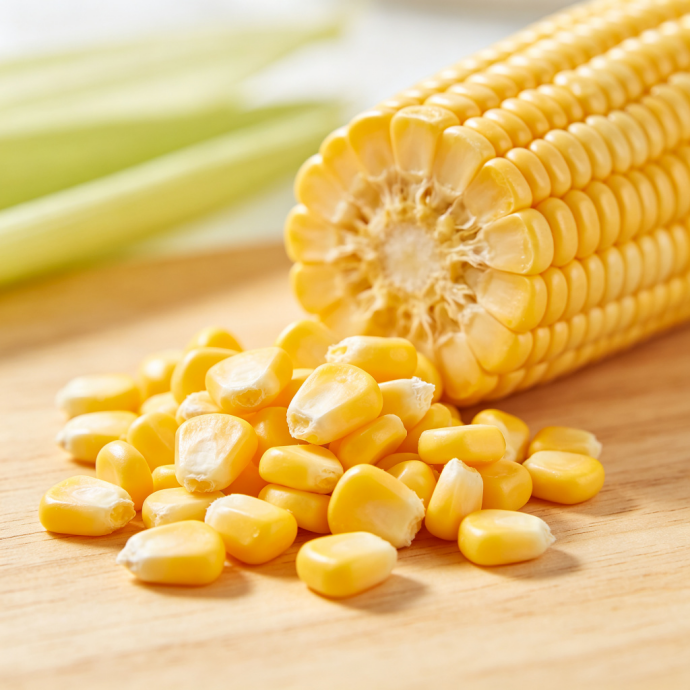
1. Traceable raw materials
Agricultural raw materials such as corn are sourced through an organic production system with controlled inputs and traceability.
2. Controlled processing
The fermentation and processing stages are managed according to applicable organic production requirements, with controlled production conditions and ingredient usage.
3. Certification and documentation
Third-party certification and traceability documentation can support customers evaluating organic ingredients for domestic and international food applications.
For manufacturers targeting premium, natural and organic food markets, these factors can become an important part of product differentiation.
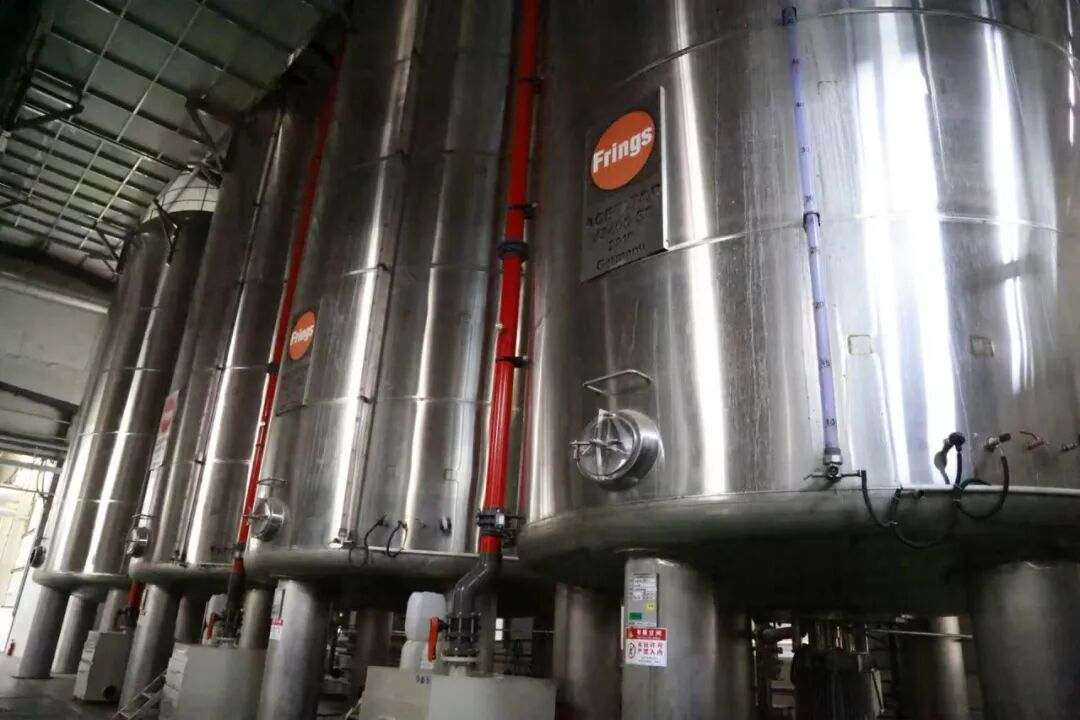
Modern brewed vinegar production increasingly relies on submerged liquid fermentation, which allows key fermentation parameters to be controlled more precisely.
In a controlled stainless-steel fermentation system, parameters such as temperature, dissolved oxygen, pH and fermentation time can be monitored and adjusted according to the production process.
Compared with traditional surface fermentation, liquid deep fermentation offers several advantages for industrial production:
More efficient fermentation
Shorter production cycles
Higher production efficiency
Better process control
Improved batch-to-batch consistency
For industrial food ingredients, consistency is particularly important. Food manufacturers need vinegar with predictable acidity, sensory characteristics and quality parameters so that the ingredient can be incorporated into standardized formulations.
Organic vinegar production requires effective process management because the use of ingredients and processing aids may be subject to additional organic requirements.
Key quality parameters for brewed white vinegar include:
Total acidity
Non-volatile acid characteristics
Sensory properties
Microbiological parameters
Raw material traceability
Production process records
At Weichuang, quality control is implemented across raw material inspection, fermentation monitoring and finished-product testing.
Our quality management and certification systems include ISO 9001, FSSC 22000, HACCP, HALAL and KOSHER, supporting the quality and documentation requirements of food manufacturers and international customers.
Clean label is no longer limited to consumer-facing products. Food manufacturers are increasingly evaluating the ingredient lists, sourcing systems and processing methods behind their finished products.
Organic brewed white vinegar can support formulations where manufacturers are looking for:
Certified organic ingredients
Naturally fermented food ingredients
Simple ingredient solutions
Traceable raw materials
Reliable acidity
Clean-label product positioning
The specific organic claim that can be made on a finished product depends on the applicable regulations, certification scope and the complete formulation. Therefore, manufacturers should evaluate the certification requirements of their target market before making organic claims.
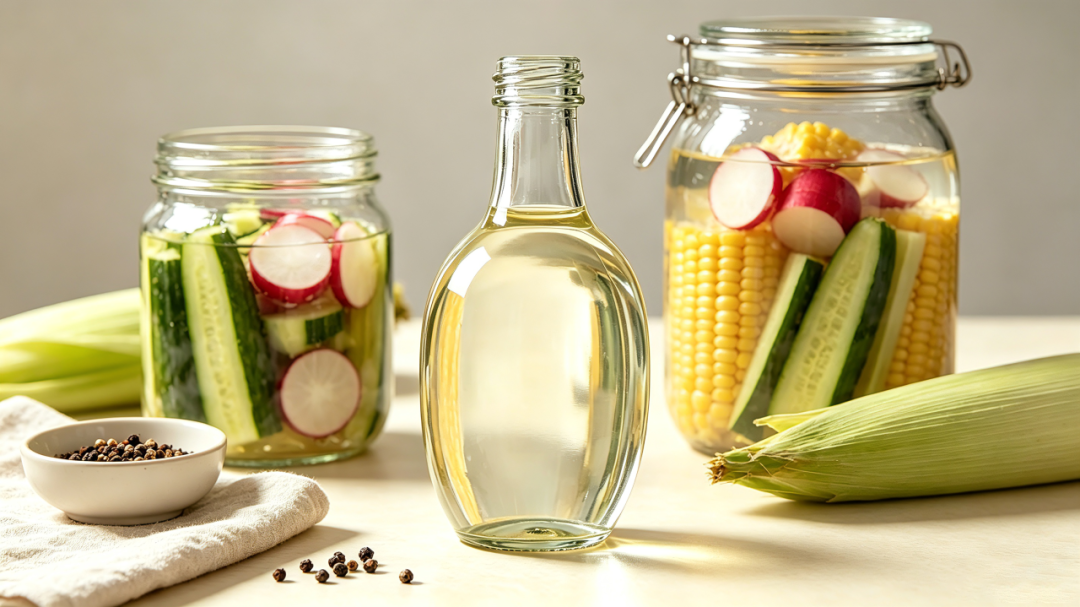
White vinegar is one of the most versatile acidifying ingredients used in food manufacturing. Organic white vinegar extends these possibilities into products targeting organic, natural and premium market segments.
Vinegar is widely used in pickled vegetables, cucumbers, pickled cabbage and other acidified foods.
It provides acidity and contributes to the characteristic flavor of pickled products. Depending on the formulation and process, vinegar can also contribute to microbial control by creating an acidic environment.
For commercial production, however, vinegar should be considered as one component of a validated food safety and preservation process rather than as a standalone guarantee of shelf life.
White vinegar can be used in bakery formulations to adjust acidity and interact with alkaline leavening agents such as baking soda.
The resulting acid-base reaction can contribute to leavening, while changes in dough pH may also influence the texture and processing characteristics of bakery products.
Organic white vinegar is suitable for a variety of condiment applications, including:
Salad dressings
Tomato-based sauces
Dipping sauces
Marinades
Compound seasonings
Its acidity can help provide the desired flavor balance while contributing to the overall formulation.
Depending on the required acidity and sensory profile, brewed white vinegar can also be incorporated into prepared foods, pickled products, sauces and other food-processing applications.
This versatility makes vinegar a fundamental ingredient for many food manufacturers.
For food manufacturers, the value of organic white vinegar is not simply its acidity.
It combines several aspects that are increasingly important in modern food production:
Certified organic sourcing
Supports product development targeting organic food markets when certification requirements are met.
Traceable raw materials
Provides greater visibility across the ingredient supply chain.
Controlled fermentation
Submerged fermentation enables precise management of key production parameters.
Stable quality
Process control and multi-stage inspection support consistent industrial supply.
Clean-label positioning
Suitable for formulations seeking naturally fermented and organic ingredient solutions.
Multiple applications
Can be used across pickled foods, sauces, dressings, bakery and other food categories.
For premium food products, organic and clean-label ingredients, the foundation of product differentiation often begins with ingredient sourcing.
Henan Weichuang Bio-tech Co., Ltd. combines fermentation technology, quality management, organic production requirements and flexible industrial supply to provide brewed vinegar solutions for food manufacturers and ingredient distributors.
Whether you are developing an organic sauce, salad dressing, pickled food, bakery product or another clean-label formulation, our technical team can provide product specifications, samples and application support according to your requirements.
Contact us to discuss organic white vinegar, acidity specifications, certification documents and customized supply solutions.
Free
sample
