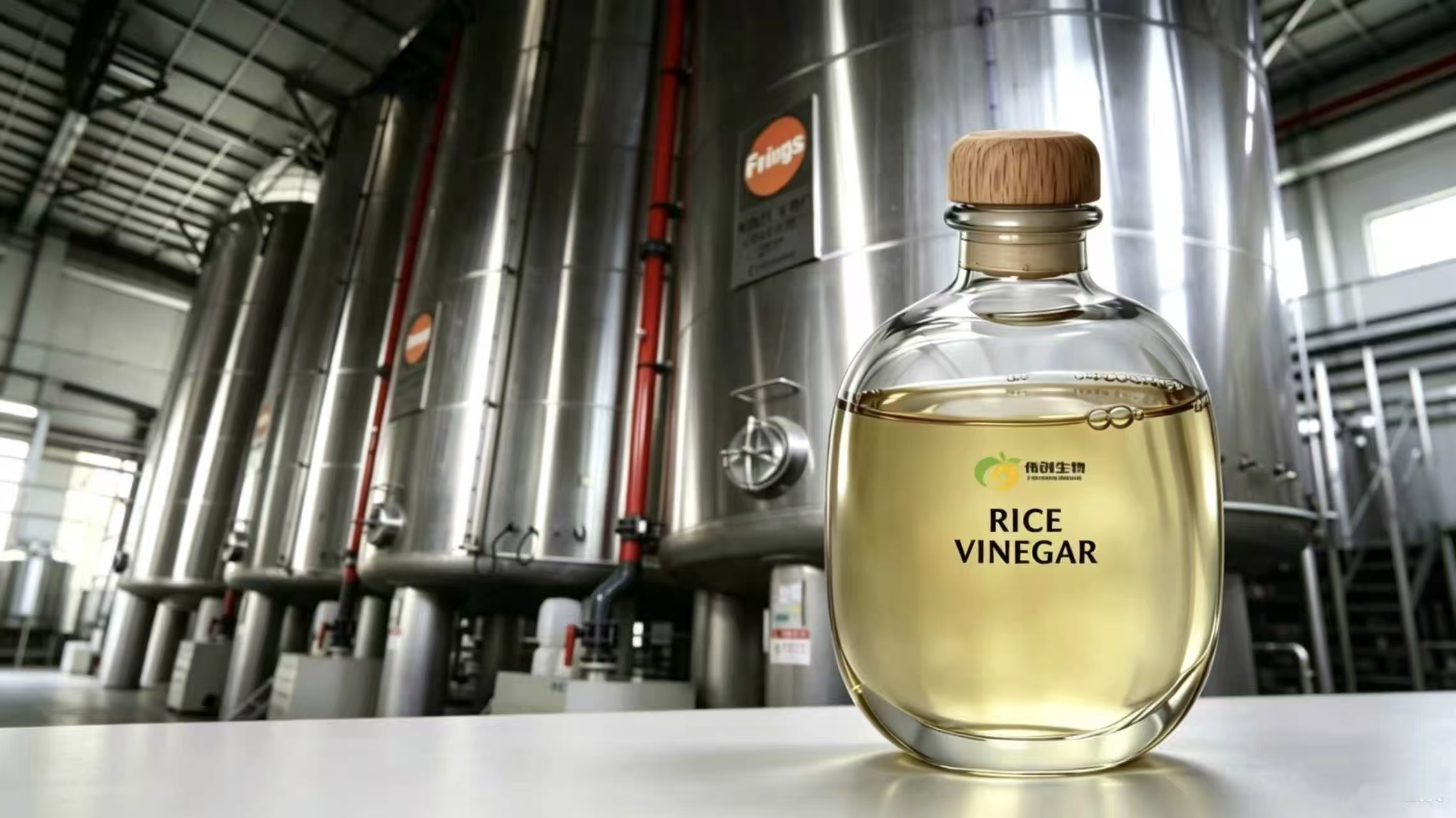
Rice vinegar is often associated with traditional seasoning, but its potential in modern food formulation goes far beyond everyday cooking.
With the growing demand for organic and clean-label food products, certified organic rice vinegar is becoming an attractive ingredient for manufacturers looking for a naturally fermented source of acidity, mild flavor and authentic rice aroma.
At Henan Weichuang Bio-tech Co., Ltd., our brewed rice vinegar has obtained organic product certification and is produced through a controlled fermentation process. From organic raw materials to fermentation and finished-product management, the production system is designed to provide traceability, consistent quality and flexible application options for food manufacturers.
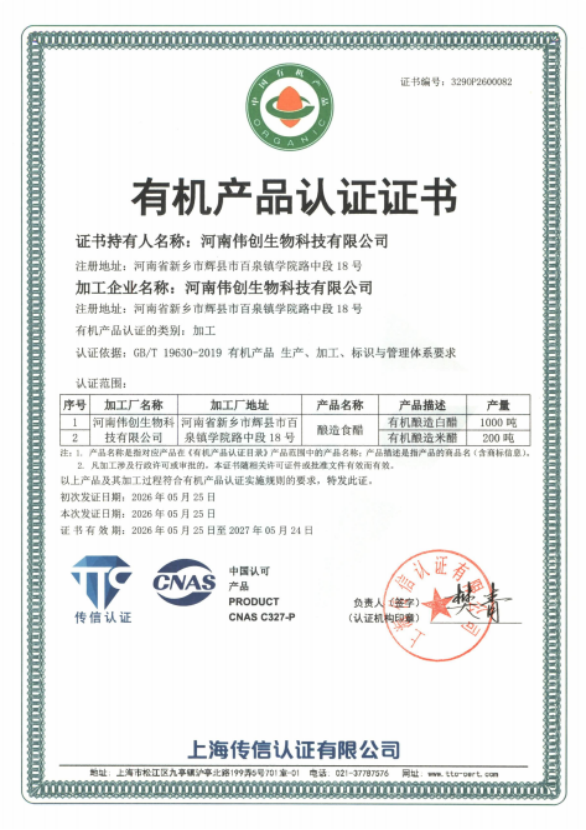
Our brewed rice vinegar obtained organic product certification in May 2026, with certification based on GB/T 19630-2019. The certified product scope covers brewed vinegar.
The certification is issued by Shanghai Chuanxin Certification Co., Ltd., an organization accredited by CNAS.
For food manufacturers, organic certification represents more than a label. It involves requirements covering raw material sourcing, production processes, segregation, traceability and documentation.
Organic raw materials
Rice and other grain-based raw materials used in certified organic production need to comply with applicable organic production requirements.
Controlled processing
The production process is managed according to organic processing requirements, including restrictions on prohibited synthetic processing aids and appropriate separation from non-organic products.
Traceability
Production records and raw material information can be maintained throughout the manufacturing process, helping customers evaluate the traceability of the ingredient supply chain.
For manufacturers developing organic food products, these requirements can provide important support when evaluating ingredient compliance and certification documentation for their target market.
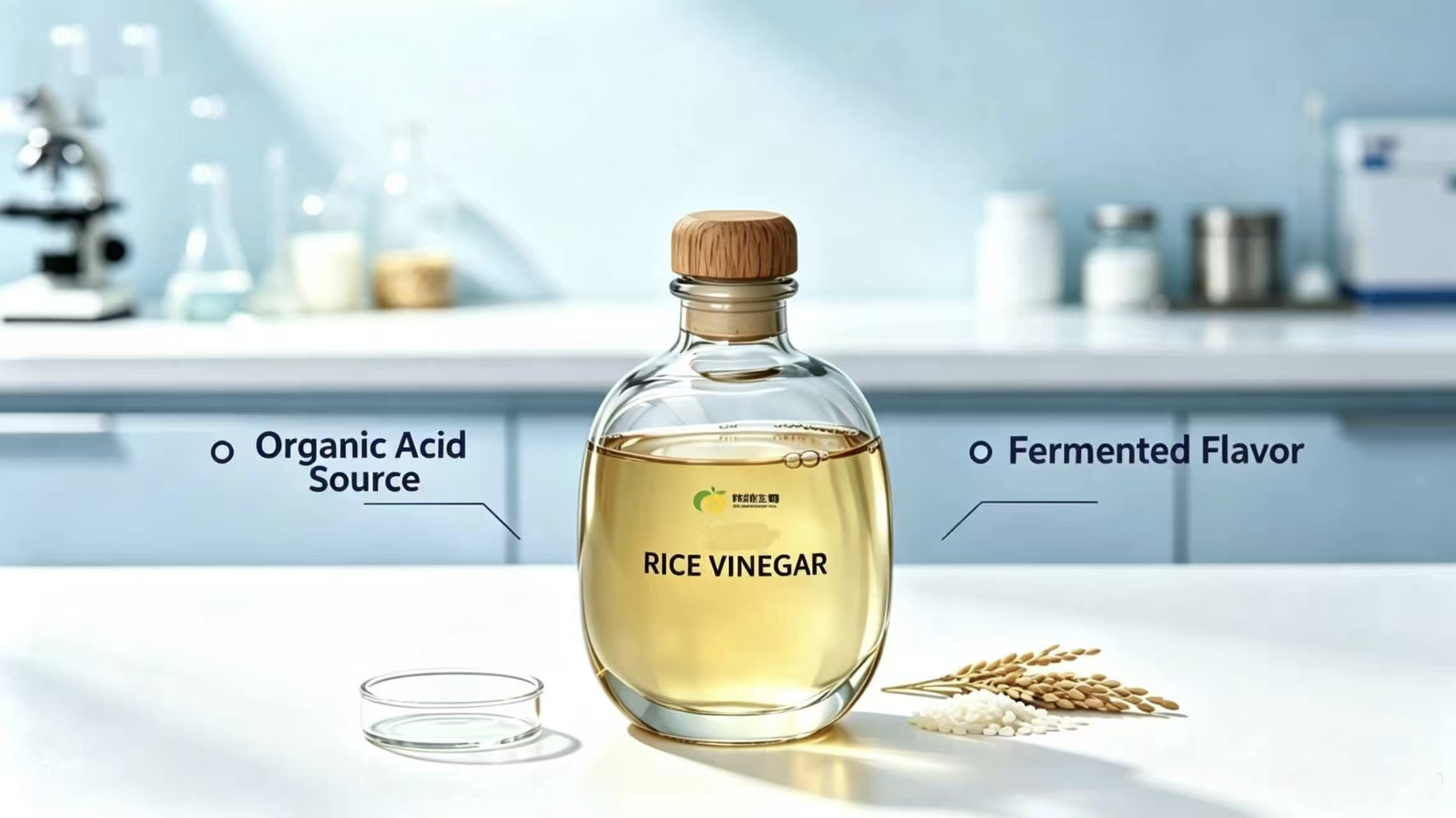
One reason rice vinegar is attracting attention from food developers is that it can contribute more than acidity.
Unlike a single-component acidulant, brewed rice vinegar is a fermented food ingredient with a more complex sensory profile. In addition to acetic acid, fermented vinegar may contain other organic acids and flavor compounds generated during fermentation.
This gives rice vinegar a milder, more rounded acidic profile and characteristic fermented aroma, depending on the raw materials and fermentation process.
For product developers, this can provide several formulation possibilities:
Acidity adjustment
Flavor enhancement
Fermented aroma
pH adjustment
Clean-label ingredient positioning
Instead of using an isolated acidulant solely to reduce pH, manufacturers can use brewed rice vinegar when both acidity and sensory character are important to the final product.
The quality of brewed rice vinegar is closely related to its fermentation process.
Traditional rice vinegar production involves several biological stages.
Rice starch is broken down into fermentable sugars through enzymatic activity, creating the substrate required for subsequent fermentation.
Yeast converts fermentable sugars into ethanol while generating various flavor precursors.
Acetic acid bacteria oxidize ethanol under aerobic conditions to produce acetic acid while contributing to the development of characteristic vinegar aroma compounds.
The interaction of these stages helps create the characteristic flavor profile of brewed rice vinegar.
For organic production, process management is particularly important because production must comply with applicable organic requirements. Control of microbial cultures, temperature, dissolved oxygen and fermentation time contributes to stable fermentation performance and product quality.
For food manufacturers, sensory quality is only one part of ingredient selection. Batch consistency and process control are equally important.
Modern liquid fermentation systems allow key parameters to be monitored and controlled throughout production.
Factors such as:
Fermentation temperature
Dissolved oxygen
pH
Fermentation time
Microbial culture conditions
can influence acidity, aroma and overall sensory characteristics.
By applying controlled fermentation technology and multi-stage quality management, Weichuang aims to provide rice vinegar with consistent characteristics suitable for industrial food processing.
The versatility of brewed rice vinegar makes it suitable for a broad range of food and beverage applications.
Rice vinegar can provide a mild acidity and characteristic rice fermentation aroma in sushi seasoning, salad dressings and other cold-food applications.
It can be incorporated into sauces, marinades, dipping sauces and compound seasonings where acidity and flavor balance are required.
Brewed rice vinegar can be used as an acidic and fermented-flavor ingredient in vinegar beverages and other beverage formulations, subject to the requirements of the final product.
In prepared foods and other processed food products, rice vinegar can contribute acidity and flavor while supporting formulations designed around naturally fermented ingredients.
Rice vinegar can also be processed into rice vinegar powder for applications where a dry ingredient is preferred.
Vinegar powder can be considered for formulations such as:
Meat products
Seasoning blends
Extruded and puffed foods
Dry mixes
Powdered beverages
The powder format provides manufacturers with greater flexibility in dry formulations while retaining the characteristic acidic profile of vinegar.
Today’s food developers are increasingly considering not only what an ingredient does, but also where it comes from and how it is produced.
Certified organic rice vinegar can support product development where manufacturers are looking for:
Organic certification
Suitable for organic product development when the complete formulation and production process meet the applicable certification requirements.
Natural fermentation
Produced through biological fermentation rather than simply providing isolated acidity.
Authentic sensory profile
Offers characteristic rice and fermentation notes alongside acidity.
Traceable sourcing
Organic production systems provide requirements for controlled sourcing and traceability.
Versatile functionality
Suitable for sauces, dressings, beverages, prepared foods and dry seasoning applications.

For food manufacturers, selecting a vinegar supplier is about more than purchasing an acid ingredient. It involves evaluating certification, raw material sourcing, fermentation technology, quality consistency and technical support.
Henan Weichuang Bio-tech Co., Ltd. combines controlled fermentation technology, quality management and organic-certified production to provide rice vinegar solutions for food manufacturers and ingredient distributors.
Whether you are developing an organic sauce, dressing, beverage, prepared food or dry seasoning, our team can provide product specifications, samples and application support based on your formulation requirements.
Contact us to learn more about our certified organic rice vinegar, certification documents, product specifications and customized solutions.
Free
sample
